Clinical nutrition care
Liver Care
Therapeutic nutrition for fatty liver, guided by your liver and metabolic markers.
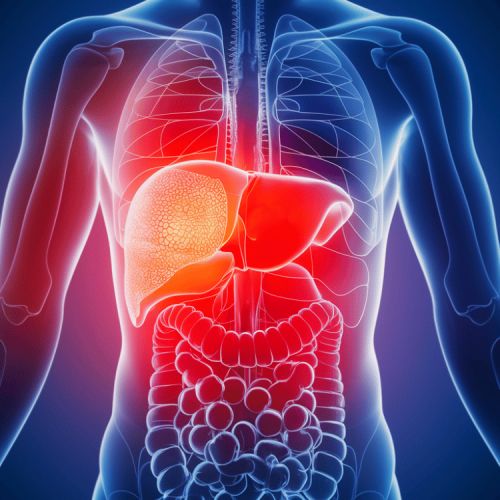
The liver is central to how your body processes food, stores energy, clears waste, and supports immunity. When it's overloaded or damaged - by excess fat, alcohol, certain medicines, or infection - it may not show clear signs until problems are advanced. At The Dietary Doctor, we use nutrition to support liver function and reduce the load on this vital organ.
Diet plays a big role. Too much sugar, refined carbs, and unhealthy fats can contribute to fatty liver; alcohol and some medications add further stress. We work with you on balanced, liver-friendly eating: appropriate calories, quality protein, and foods that support rather than strain the liver. We also consider weight, activity, and any conditions like diabetes that affect liver health.
Our Liver Care programme is designed to fit your lifestyle and any medical advice you're following - so you can protect and support your liver for the long term.
How it actually works
Fatty liver is reversible, and it is mostly about what you drink and refine.
The liver is remarkably good at recovering. What it needs is the constant fructose and refined carbohydrate load taken off it.
-
Excess fructose and refined carbs arrive
Sweetened drinks, juice, bakery items and refined flour are converted to fat in the liver.
-
Fat accumulates in liver cells
This is grade 1 fatty liver — usually silent, and found incidentally on a scan.
-
Insulin resistance deepens
A fatty liver handles glucose poorly, which drives more fat deposition. The loop tightens.
-
Inflammation begins
Some progress to steatohepatitis, where enzymes rise and actual liver injury is underway.
-
Fibrosis can follow
Left alone for years, scarring develops. Caught early, most of this is reversible.
Is this you?
This plan is built for what you are actually dealing with.
If several of these sound familiar, they are almost certainly connected. That is the point — they get treated as one picture, not six separate complaints.
Not sure?
- Fatty liver found on an ultrasound
- Raised SGPT or SGOT on a routine report
- Central weight gain with a high waist measurement
- Diabetes, prediabetes or insulin resistance
- High triglycerides
- Fatigue and a dull ache under the right ribs
What tends to shift
Why these change, not just that they do.
Every claim below has a mechanism behind it. How quickly any of it moves depends on your body, your reports and how long things have been running — so we will not put a date on it.
-
Liver enzymes trending down
SGPT and SGOT often respond within a few months once the refined carbohydrate load drops.
-
Less liver fat
Modest, sustained weight loss is the single most effective intervention for fatty liver.
-
Better insulin sensitivity
Liver fat and insulin resistance drive each other, so improving one helps the other.
-
Lower triglycerides
Cutting fructose and refined carbohydrate usually moves triglycerides quickly.
What we read
The numbers behind your plan.
Bring whatever reports you have. These are the markers we look at — and where something is missing that matters, we will tell you exactly what to ask your doctor for.
- SGPT, SGOT and GGT
- Fibroscan or ultrasound grade
- Fasting insulin & HOMA-IR
- HbA1c
- Lipid profile with triglycerides
- Vitamin D
- Waist circumference
- Hepatitis screen where indicated
We do not order tests or prescribe. Investigations are requested and interpreted by your doctor; we work from the results.
What is inside
Your plan includes
-
Fructose and refined-carb audit
Juices, sweetened drinks, bakery items and hidden sugar in your actual week — the liver's largest single load.
-
A realistic weight-loss target
Even a modest, sustained reduction meaningfully reduces liver fat. The target is set to be achievable, not dramatic.
-
One-to-one with a senior clinical dietitian
Not a chatbot and not a generic chart. A dietitian who reads your history and stays with your case.
-
Weekly customised diet & lifestyle plans
Revised every week around your progress, your appetite and whatever your actual week looks like.
-
Exercise & mobility guide
Movement matched to your condition and your current fitness, not a punishing gym programme.
-
Behavioural & dietary techniques
The practical part: cravings, portion drift, eating out, festivals, travel and stress eating.
How this runs
Three steps, and none of them is a crash diet.
-
We read your case
A free 15-minute call, then a full history: reports, medication, cycle, sleep, stress and what your week actually looks like.
-
You get your plan
Built around food you already cook. Dal, roti, sabzi — portioned and paired for your condition, not a list of imported superfoods.
-
We adjust as you go
Regular follow-ups with your dietitian. Reports get re-read, the plan moves with your results — and with a wedding or a work trip.
Questions
Before you book.
I do not drink alcohol. How do I have fatty liver?
Non-alcoholic fatty liver disease is now the commonest liver condition, and it is driven mainly by refined carbohydrate, fructose and insulin resistance rather than alcohol. It is very common in people who never drink.
Is fatty liver actually reversible?
In the early grades, generally yes — the liver regenerates well. The further it progresses toward fibrosis, the less that holds, which is the argument for acting on a grade 1 finding rather than filing it away.
Is this just a diet chart?
No. A chart is a page; this is a plan that gets revised weekly against your reports, your symptoms and your week. The behavioural side — cravings, portions, eating out, festivals — is treated as part of the clinical work rather than willpower you are supposed to find on your own.
Will I have to give up Indian food?
No. Plans are built from dal, roti, sabzi, rice and the food you already cook. Portioning, pairing and timing do most of the work. A plan that needs imported ingredients is a plan you abandon in a month.
How is the plan adjusted as I go?
Weekly. Your dietitian reviews what actually happened — what you ate, how you slept, what the scale and your symptoms did — and adjusts. When you bring fresh reports, they are read and the plan moves with them.
Can I talk to someone before deciding?
Yes. The first call is free and about fifteen minutes, with no payment and no sales pitch. You will leave it knowing what we would look at first, whether or not you sign up.
A note on scope. This page describes individualised clinical nutrition care: a clinical consultation, your health and nutrition history, review of your medical and laboratory reports where you have them, a nutritional assessment, a therapeutic nutrition plan written for you, and clinical follow-up at which progress is monitored and the plan is modified. It works alongside medical treatment rather than replacing it. We do not diagnose conditions, order investigations, or prescribe, change or stop medication — those belong with your doctor. If something in your reports needs medical attention, we will tell you and say what to ask for.
Next step
Bring your reports. We will read them properly.
The first call is free and 15 minutes. No payment, no sales pitch — you will leave knowing what to fix first, whether or not you sign up.